

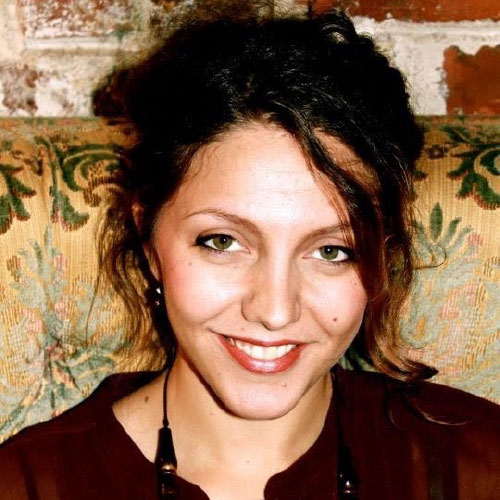
Martina Magri
University of Modena and Reggio Emilia
After a degree in cinema studies at Paris I University (Panthéon-Sorbonne), a master’s degree in applied literature with a specialisation in screenwriting at Paris IV University (Paris-Sorbonne) and a training for cameramen at École des Gobelins, she worked as a screenwriter (Sélenium Films, Atelier Farnèse) and audiovisual editor. She was a research fellow at the University of Siena (DISPOC), where she worked on the design of a digital storytelling platform for the National Diary Archive (Pieve Santo Stefano, AR), and at the University of Modena and Reggio Emilia (DSLC), where she worked on the development of the LAMA Laboratory (Audiovisual Materials Laboratory), dedicated to transmedia narratives applied to research. She is currently a PhD student at the University of Modena and Reggio Emilia. Her research project focuses on the audiovisual device as a tool for analysing the social and for the production of new sociality, and in particular as a support for self-narratives and interactions produced by migrant subjects.
Secondment destination:
Project Arts Centre
June 2024
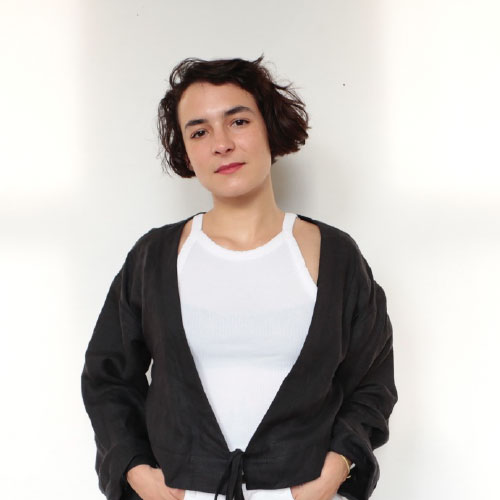
Aline Hernández
Casco Art Institute: Working for the Commons, The Netherlands
Aline Hernandez is a curator working at Casco Art Institute: Working for the Commons in Utrecht, the Netherlands. Currently, she is conducting a SGSAH-funded PhD which explores issues around performance and performativity in archives and counter-archives of (trans)gender violence in Mexico at St Andrews University, Scotland. Hernández holds an M.A. in Media, Art, and Performance Studies from Utrecht University with a specialization in Gender Studies. She is a member of the artist/activist-run cooperative Cráter Invertido and of the trans-local ecosystem Arts Collaboratory.
Secondment destination:
TBC
Marianna Takou
Casco Art Institute: Working for the Commons, The Netherlands
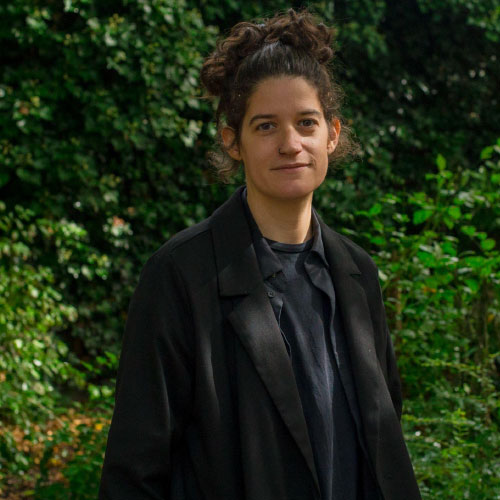
Marianna Takou is a researcher and organizer from Athens, Greece. She is currently based in Utrecht, where she works as a producer, organizer and researcher at Casco Art Institute: Working for the Commons. She first became part of the ecosystem of Casco as a volunteer in 2013. Since 2019, as part of the team, she has been working on different aspects of Casco’s operations and is a member of the Arts Collaboratory network.
With a background in Sociology and training in International Development, she holds an MSc in Sustainable Development. Her research interests and organizing focus on feminist and queer practices in mobility, migration, the commons and the degrowth movement.
Secondment destination:
TBC
Vittorio Iervese
University of Modena and Reggio Emilia
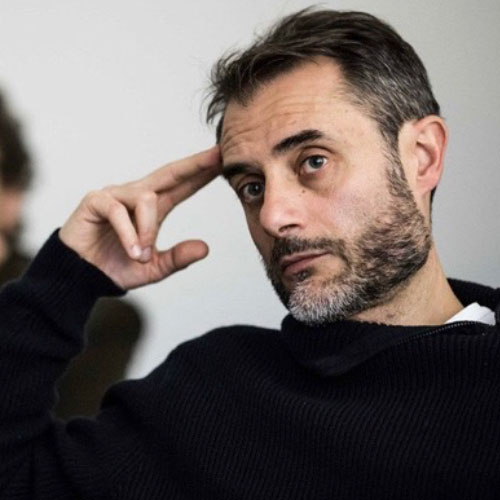
Vittorio Iervese is Professor in Sociology of Cultural and Communicative Processes at the Department of Linguistic and Cultural Studies, University of Modena and Reggio Emilia.
He conducted research on visual culture, visual sociology, cultural design, festival studies, conflict management, intercultural communication, social participation, sociology of childhood. His latest researches are on the use of still and moving images to build narrative memories (SHARMED. Shared Memory and Dialogue) and a study on new digital platforms for audiovisual and culture (CLAP – Cultural Lab Platforming). Since 2017 he is President of Festival dei Popoli – Istituto Italiano per il Film di Documentazione Sociale, with which he collaborated since 2007 in the programming of the competition and for which he curated several sections and retrospectives. He is the director of the advanced course in Digital Humanities (Dhialogue) and the Festival of interactive and immersive transmedia narratives (VRMF – Virtual Reality Movie Festival)
http://personale.unimore.it/Rubrica/dettaglio/viervese
Secondment destination:
Verein zur Förderung von Kunst und Kultur am Rosa-Luxemburg-Platz e.V.
February 2023
SPACEX Training Event 3: Summary Report by Emma Mahony
There’s an Irish seanfhocial or old saying that goes ‘Ar scáth a chéile a mhaireann na ndaoine’. The English translation is ‘we live in each other’s shadow’. In other words, we rely on and need each other. Therefore, to survive the permacrisis that we and our planet faces, we must find new ways, or rediscover old ways, of living and being together. This overarching issue of our interdependence on each other, on other non-humans and on the planet shaped this two day symposium, and it also underscores the remit of the SPACEX research action.
The growing interest in commoning today comes from dissatisfaction, and often deep despair, with the status quo and the manner in which it suppresses social life. Unlike social movements that engage in protests actions from within the hegemonic coordinates of the neoliberal state, commoning is prefigurative. In other words, it seeks to create this better and more equitable future by actively testing out ‘in an embryonic way’ a world beyond capitalism. Commoners experiment with new collective and collaborative forms of living and being together, and by shaping new radical political subjectivities based around interdependence, mutuality and radical care. An essential component of the commons is the will to remain open to all. A commons can only continue to function as a commons as long as it remains open to all newcomers.
Over the course of the two days we discussed how artists, communities and cultural organisations variously engage in commoning practices and practices of radical care. We considered the differences between communities in the Global South that practice commoning as a means of escaping the ‘unlivable live’ neoliberalism has crafted, and how artists, academics and community organisations in the Global North internalise commoning strategies in their day-to-day lives and operations; and whether publicly funded organisations and artistic practices can be considered as commons?
Day 1 kicked off with An Introduction to Behavioural Economics by Kevin Denny (UCD SPACEX researcher). In this session, Denny discussed how psychological insights help explain economic decision making. He also touched on some of the key ideas that shape the field of behavioural economics including bounded rationality, heuristics, and the implications for pro-social behaviour that arise in terms of the ‘problems’ of the commons.
Session 2 saw the participants playing the cooperative boardgame World of Work designed and hosted by Michelle Browne (SPACEX Researcher, NCAD).
Working in teams of 6, the players worked together to deal with external forces, tech innovations and societal changes that assist or reduce job creation in a town like St Helens in the North of England. The aim of the game was to gather a number of social benefits such as housing, sustainable environment and basic income, to improve the lives of those who live in the town.
After lunch on Day 1 (provided by Luncheonette, a long term art project centred around hospitality and food, started by the artist Jennie Moran in 2013), Paul O’Neill (SPACEX Researcher, University College Dublin) led a discussion based workshop that focused on Counter-Mapping the Materiality of the Internet in Dublin City. Working in two groups, the participants critically reflected on our relationship with networked technologies, while considering more sustainable ways of communicating.
Session 4 was a walking tour of Dublin’s ‘The Liberties’ led by Seoidín O’Sullivan (SPACEX researcher NCAD) and Anthony Freeman an artist, beekeeper and community worker who co-founded In Our Shoes is an award winning walking tour charity. https://citiesgovernancesustainability.eu/current-projects/urban-grit/.
After supper, the participants moved onto Project Arts Centre for a tour of the exhibition Being Horizontal / Sínte (curated by Nora Heidorn). The tour was led by Sara Greavu (SPACEX Researcher, Project Arts Centre). In contrast to the standard enlightenment representation of the human body as a singular, upright, able-bodied man, gazing forward, this group exhibition paid caring attention to reclined bodies and to bodies inclined towards each other, favouring a model of the human as interdependent and reliant.
The evening ended with a Performance of Manifest also at Project Arts Centre, which forms part of What Does He Need? – a long term collaborative project by Fiona Whelan (SPACEX Researcher, NCAD), Brokentalkers, Rialto Youth Project and a Dublin city network of individuals and organisations.
Manifest was a frank and unflinching performance exploring the current state of masculinity. Taking the form of a workshop, a group of men were facilitated in a conversation about what it means to be a man.
The second day, which saw the symposium opening out attendance to NCAD staff and students and invited guests, began with Theories of Commoning. This event interrogated some of the ‘theories of commoning’ that emerge in the writings of two contemporary theorists of the commons. Stavros Stavrides (SPACEX Researcher, LUC) explored the ‘Emancipatory Potentialities of Urban Commoning’ with a focus on Latin America’, and Gary Hall (SPACEX Researcher, CU) interrogated ‘The Commons as Coming Together of Those with Nothing in Common’.
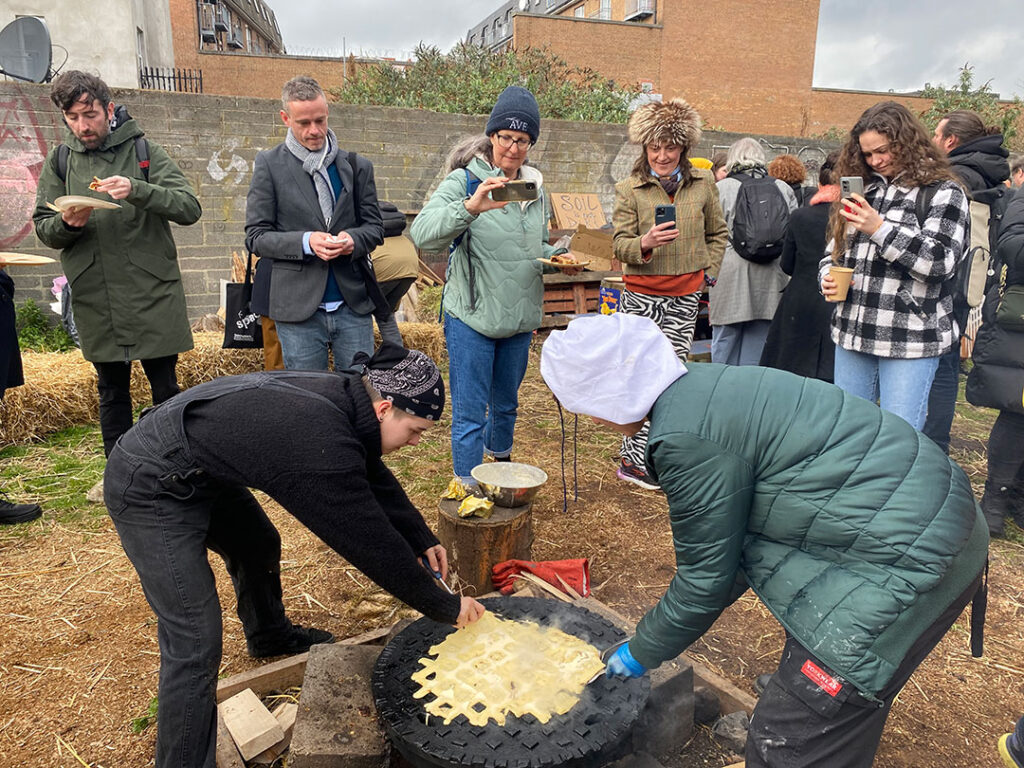
This was followed by Elevenses for the “Hungry Months” hosted by Gareth Kennedy (SPACEX Researcher, NCAD), and Students from NCAD FIELD. Since 2020, Gareth has been charged with running the Studio+ NCAD FIELD module in a derelict brown field site beside the College which is in the process of being reappraised as a Novel Ecology. FIELD students served the participants pancakes cooked on a reclaimed manhole cover over a camp fire and also offered tours of the site.
The third event of the day saw participants move to NCAD Gallery for Principles of Space Detection a
performance by Irina Gheorghe that focused on how processes of obstruction, deception and camouflage shape interactions between members of the same social group, and between a society and what it perceives as alien to it. This event was curated by Anne Kelly (SPACEX research, NCAD)
After lunch, Susanne Bosch led The 60 min Commoning ParKour: An embodied commoning experience in the concourse at NCAD. The ParKour involved “seeing” and experiencing the environment in a new way and imagining the possibilities for movement in, with and around it.
The afternoon sessions focused on Commoning as Care Practices. Part 1 saw representatives of cultural organisations Rosie Lynch, Callan Workhouse Union, and Siobhan Geoghegan, Common Ground discuss the role that cultural organisations embedded in local communities play in the development of inclusive and empowered communities capable of producing collective responses to issues of spatial and social justice, care, housing development, climate change, ecology and the urban environment.
Part Two explored how the practices of artist’s Evelyn Broderick, The People’s Shed and Fiona Whelan (SPACEX researcher, NCAD) are embedded in local communities and they role they play in the development of inclusive and empowered communities. The People’s Shed, established by Broderick during her residency in studio 468, is a space for the sharing of skills and social knowledge through collective making. Dr. Fiona Whelan’s practice explores and responds to systemic power relations and inequalities through long-term cross-sectoral collaborations with diverse individuals, groups and organisations.
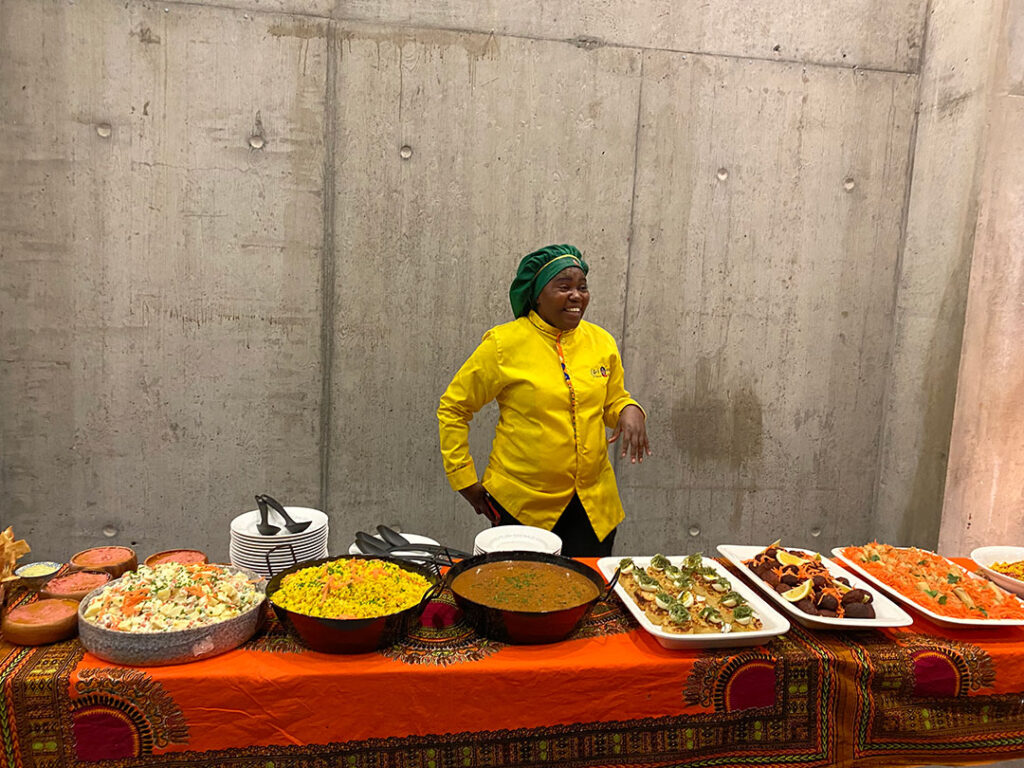
The symposium drew to a close with an introduction to Our Table by Ellie Kisyombe, co-founder, who discussed how thi ssocial enterprise focuses on producing an inclusive community through multi-cultural food and campaigning to end direct provision in Ireland. This was followed by a delicious feast laid on by Our Table whileparticipants in The People’s Shed led a live Trad music session
SPACEX Training Event 3: Summary Report by Emma Mahony Read More »
Daniel Peltz
Uniarts Helsinki, Finland
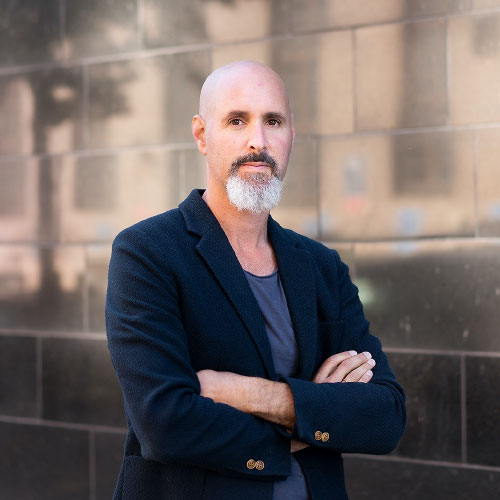
Daniel Peltz is an artist and Professor of Time and Space Arts with a specialization in Site and Situation Specific Practices at the Finnish Academy of Fine Arts, Uniarts Helsinki. He is also the co-founder of the long-term, place-based research project, Rejmyre Art Lab’s Center for Peripheral Studies.
Through public projects, performances and media installations, Peltz’ artworks explore complex social systems, attempting to provoke ruptures in the socio/cultural fabric through which new ways of being may emerge and be considered. To accomplish these goals, he uses a range of intervention, ethnographic and performance strategies. His projects often take the form of existing social behaviours, systems or protocols to directly engage non-art audiences in the language of critical art practice.
Secondment destination:
Kunstverein am Rosa–Luxemburg–Platz, Berlin, Germany
Margot Mecca
Festival dei Popoli – Istituto italiano per il film di documentazione sociale ETS (Italy)
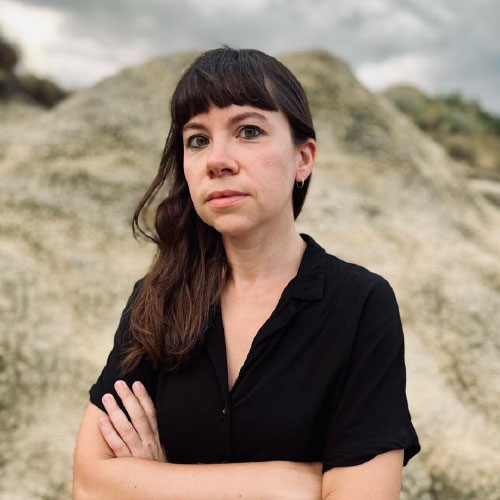
Margot Mecca is a researcher, programmer and producer working mainly in the field of creative documentary. She works at Festival dei Popoli since 2011, she’s currently a member of the selection committee and Head of Doc at Work Future Campus, an initiative dedicated to emerging talents in documentary filmmaking. She collaborates, in different roles, with several film festivals around Europe (FIDMarseille, Visions du Réel, Majordocs).
She holds a PhD in Geography from Universitat Autònoma de Barcelona; she has been a post-doctoral researcher at Universitat Pompeu Fabra from 2019 to 2023. Her research interests focus on urban public space, gender, youth and the use of cinema in ethnographic research.
https://www.festivaldeipopoli.org/
Secondment destination:
University of Applied Arts Vienna, March 2023
Gary Hall
Coventry University UK
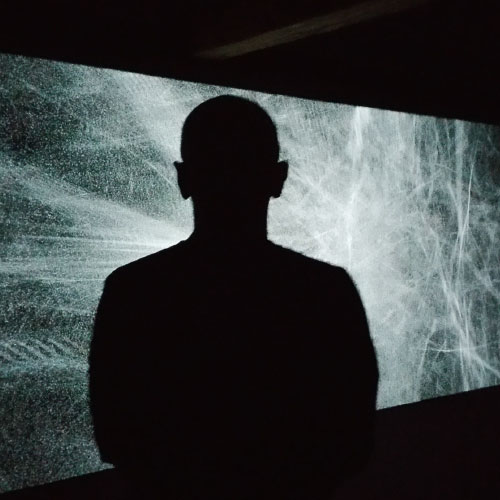
Gary Hall is media theorist and experimental writer, editor and publisher. He works (and makes) at the intersections of digital culture, politics and technology. He is Professor of Media at Coventry University, UK, where he directs the Centre for Postdigital Cultures. He is the author of a number of books including, most recently, A Stubborn Fury: How Writing Works In Elitist Britain (Open Humanities Press, 2021), Pirate Philosophy (MIT Press, 2016) and The Uberfication of the University (Minnesota UP, 2016). In 1999 he co-founded the critical theory journal Culture Machine, an early champion of open access in the humanities. In 2006 he co-founded Open Humanities Press (OHP), the first open access publishing house explicitly dedicated to critical and cultural theory, which he co-directs. His work can be found at www.garyhall.info
Secondment destination:
CASCO