Author name: admin

Jitka Hlaváčková at University of Amsterdam (UvA), Netherlands

20.9.-23.9.2023 + 1.2.-10.2.2024 + 11.10.-18.10.2024 + 15.-22. 10. 2025 (planned)

I completed my secondment at the Van Abbemuseum in The Netherlands in 2024. This institution is shifting its focus to become a Constituent Museum where ‘museums put relationships at the centre of their operations.’(1) The museum is also in the process of developing new guidelines for the museum’s archive. The institution is asking ‘What does a constituent archive look like’ in the context of the development of a new curatorial plan for the permanent exhibition in 2025 that will embody the practices of the constituent museum.

My practice sits within the field of socially engaged participatory and collaborative practice and I am concerned with how we might preserve or archive the participatory element of the work as another medium or foundational aspect of the work. For the museum, as a commissioning body and exhibition/social I’ve spent three weeks in Amsterdam and The Hague so far, and plan to complete my secondment in February 2025. 

On my trip I visited the Stroom den Haag several times, where I had the opportunity to study and debate especially with a curator Vincent de Boer, which was very beneficial for my gallery practice. Vincent de Boer and I have continuously co-organised several events in Prague: 23-24 Sep 2024 an international conference on new landscape aesthetics and artistic research, attended by four SPACEx researchers – see here. A peer-reviewed collection of papers will be published, with SPACEx as a partner. As I’m working on a project caled Cultural and Sustainable Landscapes through Deep Mapping. Opportunities for artistic strategies in public space in urban post-industrial areas. (Case studies of several European sites.), I am very grateful for the network that working within the Spacex community provides. For next years we are planning with the Faculty of Architecture of the Czech Technical University in Prague another international conference directly on the aesthetics and artistic research of post-industrial landscapes. On November 15, 2004 we are also organizing a thematically related conference with the participation of three of SPACEx members – program here

I had the opportunity to have inspiring cooperation with Christa Maria Lerm Hayes (UvA) – during her visits in Prague and my visits in Amsterdam, and through her I got to know curator Megan Hotger (UvA), with whom Im intensely collaborating on a large exhibition and publication Art of Activism, which will take place at Prague City Gallery in autumn 2025. 

The Prague City Gallery had the opportunity to host quite a number of Spacex researchers from different countries – Christa Maria Lerm Hayes (UvA), Vincent de Boer (Stroom den Haag), Jasper Joseph Lester and his students Carmen Maria Mariscal and Marissa Ferreira from the RCA London, Paul Jackson from University Northampton), Charis Nika (University of Cyprus). We are also in close proffesional contact with Chiara Valci Mazzara and Susanne Prinze (Kunstverein am Rosa-Luxemburg-Platz, Berlin), Paul Rajacovicz, Barbara Holub, and others.

Martin Netocny and I also joined a conference organized by University of Cyprus in Nicosia (SPACEx member) in May 2024: AESOP Cyprus International Symposium “Constructing Peace through Public Space: What Publics? Whose Commons?”.

Jitka Hlaváčková at University of Amsterdam (UvA), Netherlands Read More »

Michelle Browne at Van Abbemuseum, Netherlands

Free Sol Lewitt Replica, Ghent region, Belgium 2024. Photo: Michelle Browne.

April 2024

I completed my secondment at the Van Abbemuseum in The Netherlands in 2024. This institution is shifting its focus to become a Constituent Museum where ‘museums put relationships at the centre of their operations.’(1) The museum is also in the process of developing new guidelines for the museum’s archive. The institution is asking ‘What does a constituent archive look like’ in the context of the development of a new curatorial plan for the permanent exhibition in 2025 that will embody the practices of the constituent museum.

My practice sits within the field of socially engaged participatory and collaborative practice and I am concerned with how we might preserve or archive the participatory element of the work as another medium or foundational aspect of the work. For the museum, as a commissioning body and exhibition/social space for the work, it is important to consider what its role is in preserving the relational aspects of the work and how this reflects on the role of the museum in society in the 21st century.  

For my research, I chose a participatory work by the Danish group Superflex to consider how I might revisit a work in the archive to flesh out its participatory aspects. Free Sol Lewitt was part of In-between Minimalisms / Free Sol LeWitt curated by Christiane Berndes, Daniel McClean and SUPERFLEX  which formed part of a larger programme Play Van Abbe – Part 2: Time Machines at the museum in 2010. Superflex presented a workshop facility within the exhibition space where copies of Untitled (Wall Structure) by Sol Lewitt (1972) were reproduced 23 times during the exhibition. The public signed up for a lottery where they could win one of these replicas. The work considered issues around authorship and usership, and public and private ownership, and the status of the art object within this nexus. 

I contacted the participants of the work and received 4 responses. I carried out interviews with the participants at the locations of the work to discuss their motivation for taking part in the project, their relationship to art and art objects before and after their involvement? The information has been collected through audio and visual means and the intention is to create an audio essay that will draw out these themes, alongside a discussion of the critical and practical concerns of the work in relation to the evolution of the museum in the 21st century.

(1) https://internationaleonline.org/publications/the-constituent-museum-constellations-of-knowledge-politics-and-mediation/ [Accessed 8 November 2024]

Michelle Browne at Van Abbemuseum, Netherlands Read More »

Gareth Kennedy at Stroom Den Haag, Den Haag, Netherlands

The Garden Department permaculture garden of the Gerrit Rietveldt in March 2024. It is a depaved intervention on the grounds of a former modernist greenspace.

March 21st  April 5th  /   July 11th – 26th 2024

I run a novel programme called NCAD FIELD at undergraduate level and also co-organise course work there at postgraduate level. FIELD integrates theories and practices around the Urban Commons, Critical Ecologies and Rhizomatic pedagogy. Crucially it is located on a brown field site that through active and ongoing pedagogical practice is being reappraised as a Novel Ecology and a space of responsible co-creation and usership with respect to human and more than human worlds. My secondment to Stroom was focused on critically appraising the work we do in the FIELD from afar, to investigate comparable sites and practices in the Netherlands and to create a network to build future collaboration and capacities.

March 21st – April 5th 2024

The first visit was set around Easter. This was to make introductions and refine research interests with respect to Stroom, Den Haag and beyond. The idea of the first visit was to get to know Stroom, meet the staff, research in the Library and then branch out into broader context on the basis of these exchanges. Crucially I focused on visiting sites relatable to the FIELD that are tethered to institutional contexts and function more than being passive gardens or green spaces. These included the artist landscapes of artist Annechien Meier, the Edible Estate Permaculture garden developed by artist Nils Norman as part of a multiyear project with Stroom, and the Garden Department at the Gerrit Rietveldt in Amsterdam. Contacts and visits were also made to Utrecht and Eindhoven.

July 11th – July 26th 2024

I returned in July with two core questions:

A. How seasonal, cyclical and environmental time does / or does not plot onto linear progressive institutional time and the practices undertaken within them (whether this be in an educational or another institutional context). The follow up question to this is how adaptations to work with seasonal time might help institutions to become more resilient, ecologically responsive and indeed happier spaces for human and More-Than-Human constituents.

B. To identify and chart a series of outdoor spaces used by institutions and the usership and practices supported by these spaces. Also, whether if these spaces are fully integrated and valued within the operations of the institution or are they considered ‘extra’, ‘volitional’, ‘temporary’ sites to the life of the institution.

Returning in Summer had the advantage of seeing outdoor sites in full bloom, but also perhaps during a lull in activity due to Summer holidays. I revisited sites from before to monitor them in high season, and also affirm relationships. This included engaging with Annechien Meier’s new project establishing a roof garden on a modernist building in Den Haag and also emergent artists who are developing a Queer Ecology space. The key outcome from this period was the FIELD being included in the nascent Art Research Gardens Network led by Anna Colin of Goldsmiths, London. Together with partners in 6 other locations we have applied for a Curiosity Award, which would facilitate movement between all partners to ‘go see’ and participate as guests and hosts in return. Having FIELD within this network which includes the Van Eyck Academy, Gerrit Rietveldt, Goldsmiths and partners in Tangiers and Limoges. I am still evaluating my research in Den Haag. I am framing this nascent network as a living archive of outdoor pedagogical sites. The ‘living’ aspects connotes their dynamism as biodiverse natureculture intersections but also their precarity as some of the spaces are under resourced, contingent on the lead of driven individuals and also subject to future ‘development’.

Gareth Kennedy at Stroom Den Haag, Den Haag, Netherlands Read More »

Paul Jackson at Prague City Gallery

My first SPACEX secondment to Prague City Gallery took place in the final week of March 2023. My focus was on the history of fascism and antifascism, especially using the history of emotions approaches to study this subject matter. 

My trip was an excellent opportunity to explore a city with a complex history and consider the relationships between representation, fascism and antifascism. I was able to explore museums and galleries and reflect on a range of aspects of a developing project. 

I had opportunities to meet with members of the Academy of Fine Arts in Prague, where I gave a talk to students on studying fascism and the history of emotions theories. On my walk to the lecture, I took a picture of an antifascist sticker at the Prague Metronome, typical of many ways antifascist cultures manifest in urban settings. I included this in my talk too. 

I also had an opportunity to work closely with my host organisation, Prague City Gallery, to discuss developing a project around Czech artists and antifascism. I met with artists who are working with themes of antifascism and activism, and developed some initial ideas for the longer project. In particular this will think about the ‘emotional regimes’ developed by fascist cultures, and how antifascist art responds to these typically antagonistic ideals. 

I now want to delve further into this aspect of antifascism and explore the ways antifascists develop emotional connections to ideals such as democracy and the defence of personal liberty, as part of their opposition to the politics of the extreme. In 2025 I am set to return to Prague, for follow-up interviews with artists, where I aim to develop my research into a new study of antifascism related to conceptualisations of affect. 

Paul Jackson at Prague City Gallery Read More »

Dr Emma Mahony at Casco Art Institute: Working for the Commons

Research Question: How can the archive support the research and testing of alternative forms of cultural value that are not measured by the neoliberal value discourse, such as commoning, care and unlearning practices, and the social wealth they generate?

My research into the archive at Casco Art Institute: Working for the Commons responds to the above research question that, in turn, was inspired by RT12: Grass Roots Practices: Documentation and the Archive will analyse existing spatial projects in the archive to find ways of articulating art policy and methods through archival materials.

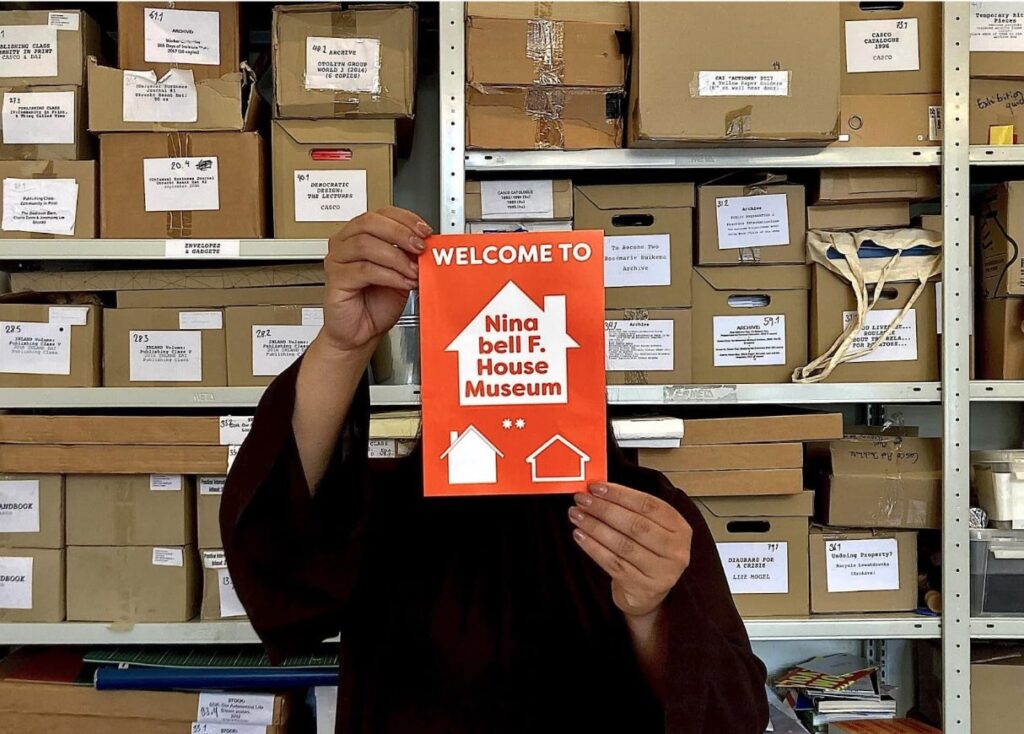
Through an analysis of the Nina F. bell House Museum archive at Casco, I examined how the principles and practices of commoning, care and unlearning can be compatible with a publicly-funded, semi-horizontal art institutional structure. Commoning is necessarily an ongoing constituent process that involves multiples trials, exercises, sometimes impossible obstacles and perceived failures, but ultimately a commitment to ‘stay with the trouble’. My research of the Casco archive enabled me to understand the complexities of these processes particularly as they were applied to the invisible, back-end of the art institution’s operational structure and staff relations, but equally the forms of social wealth these processes generated. 

My research has culminated in an academic article entitled, ‘Commoning the Art Institution: A Case Study of Casco Art Institute: Working for the Commons’. This article examines how the principles and practices of the commons and ‘commoning’ have been applied by Casco Art Institute: Working for the Commons, as a means to make their institution more just and equitable. The analysis is conducted via a lens borrowed from Gerald Raunig, where he sets out six tenets for what he terms ‘the art institution of the common’, in his 2013 article ‘Flatness Rules: Instituent Practices and Institutions of the Common in a Flat World’. It will argue that Casco’s approach sets itself apart from the other institutions Raunig has examined, by applying the practices and principles of commoning to both their front-end programming activities and to their back end internal governance processes, what Casco call a ‘double track’ approach to commoning. It will also consider the challenges the team at Casco have faced, and their commitment, after Donna Haraway, to ‘stay with the trouble’ and not shirk from sometimes (im)possible challenges.

Together with my NCAD colleague and fellow Spacex-rise researcher, Seoidin O’Sullivan, who also conducted research into Casco’s archive, we are testing out commoning and unlearning exercises in the context of the art school with a view to the students unlearning neoliberal values that the students perceive to be negative. Workshops with the students concluded with a desire to unlearn values such as ‘individualism’, ‘competitive behaviour’, ‘that failure is only negative’ and the overwhelming feeling of ‘busyness’ that working as an artist against a backdrop of precarious labour and the gig economy gives rise to.

Dr Emma Mahony at Casco Art Institute: Working for the Commons Read More »

Dr Tom O’Dea at Kunstverein am Rosa-Luxemburg Plaz (KRLP)

I have completed my secondment to Berlin with Kunstverein am Rosa-Luxemburg Plaz (KRLP). The work consisted of two visits – the first to understand the context of the place and the second to engage in a public research action. The primary visit was centred around the concerns of The Department of Embedded Knowledge to understand what types of knowledge were embedded in the context surrounding the gallery – initially, based on the limited time available this focussed on ideas of the linguistic embeddings of the place through place names. An item of particular significance in the context given the changes to place names over recent history and a recent protest about a business  – the far right associated clothing brand Thor Steiner – being incompatible with the name of the street it was proposed for – Rosa Luxemburg Straße. The work was interested in the area’s connections with trade-unionism, it’s later gentrification and the existence of platform and precarious labour in this context.

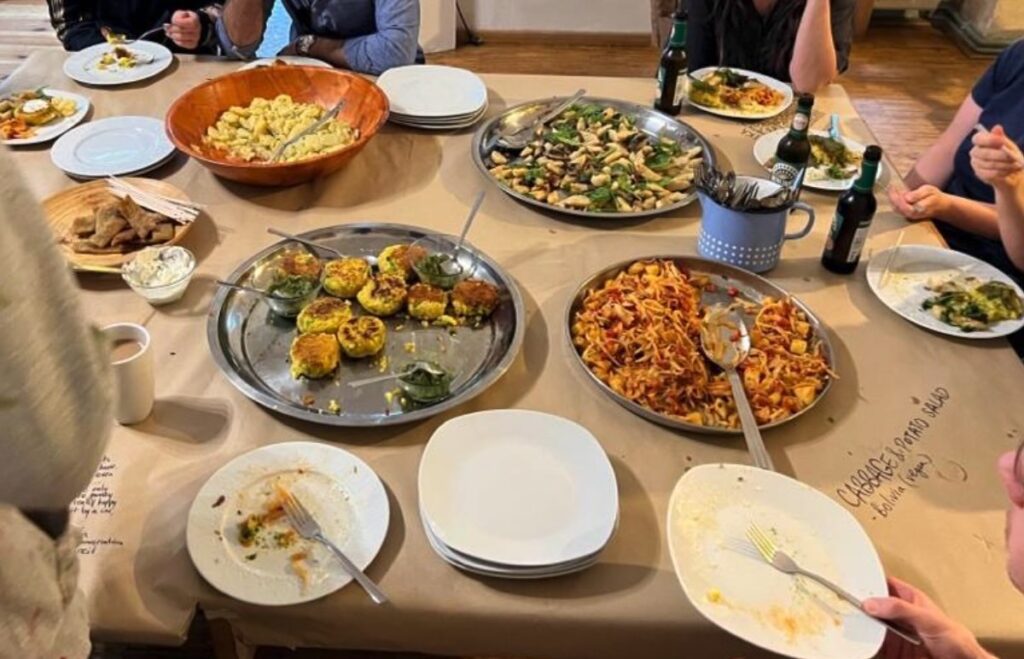
The challenges of doing “embedded” work in such a short space of time and from a distance was somewhat clear early on and so the project changed a little before the second part of the secondment. The latter part of the project focussed more on what are the conditions that allow organisation are. The project engaged with another space, Offline, that is formed as a space for collective action with a particular connection to artistic action and in the context of techno-capitalism. Working with them and with KRLP the research outcome became an event; “It’s easier to talk about [platform capitalism] when having dinner together”. The event was an open event with food and some framing prompts around the history of European Colonisation, the movement of people and resources in response to this, the contemporary conditions of European immigration law and the use of digital labour platforms. The food menu was a series of potato dishes that connected to each of these prompts.

The invitation to the event was circulated amongst various networks by Offline and in various activist networks. As the invitation and respondents included people of various immigration status it was decided that there would be minimal documentation of attendees and outcomes. 

Dr Tom O’Dea at Kunstverein am Rosa-Luxemburg Plaz (KRLP) Read More »

Martin Netočný at University of Amsterdam (UvA)

My research aim is based on critical analysis of virtual art platforms (e.g. O-fluxo, Art viewer but also Instagram) and their influence on artistic practise but also condition of contemporary galleries.Those platforms are enquired as an indexes of discursive limits (Foucault, 1969) but also as a specific form of public spaces with its autonomous cognitive rules (Malafouris, 2013) and aesthetics (Virilio, 1980). Those kinds of virtual public spaces are then – even if it looks at first sight differently – indisputably linked with material artifacts (Miller, 1997) in galleries and creates one coherent knowledge system consisting of various actors (Latour, 2005).

To understand how virtual platforms disseminate its potential it is firstly important to describe their aesthetic patterns influencing the depiction and presentation of art pieces. My research is for that reason stepping back from established art science positions which are mostly focused on one particular object and tries to term the trends in the contemporary art scene in border scale (Bishop, 2024). In other words – it is more about creating topology of similarities rather than typology of details. Because of mentioned specificity we can methodologically classify this approach as study of material culture dynamics in galleries and studios plus its enlarged cognitive assumption caused by the virtual realms.

And because an important part of my terrain is accessible from places all around the world I had decided to use my SpaceX secondment in UvA mostly for self-led research and regular consultations with several scholars in the Department of digital humanities of Amsterdam Institute for Humanities Research. Closeness of Utrecht city and the fact that the local university has a strong tradition in New Materialism studies (e.g. Rosi Braidotti and Rick Dolphijn are based there) provides another valuable consultation option. Last but not least the lecture summing up my one month abroad research results was already arranged with art historian Christa-Maria Lerm Hayes at UvA.

Martin Netočný at University of Amsterdam (UvA) Read More »

Lukasz Risso at University of Modena

I dedicated my secondment period to conducting research around the liberatory potential of (an)archival materials and their capacity to foster contemporary political struggles.  During my placement period at the University of Modena, I engaged in practices of collaborative education, archival inquiry, collective research, and interdisciplinary exchange.

In the framework of the SpaceX programme, I collaborated with URBANER – Culture Urbane Emilia-Romagna,  AFOr- Archivio delle Fonti Orali, Collettivo Amigdala, Istituto Storico di Modena, AISO – Associazione Italiana di Storia Orale on a series of events and workshops with artists, local residents, researchers and activists around the topics of urban displacement, depopulation and memory.

Working specifically in the context of the „Villaggio Artigiano” – a semi-autonomous, self-sufficient suburb of Modena – I, alongside researchers from the host institution, attempted to create a collective spatial memory of the village.  After the conclusion of the first edition of the School of Oral History, we proposed a public meeting on the theme of archives from their constitution and creation to their possible (re)use. Starting from the sharing of the outcomes of the School and the practices developed so far for the construction of the digital archive of oral sources of the AFOr project, the discussion aimed to develop a critical dialogue on the topic thanks to the comparison with other projects that were presented during the event.

During the second part of the secondment, in the framework of the To Echo/Fare Eco and in collaboration with AFOr – Archivio delle Fonti Orali, we discussed and put into practice the ideas around reimagining and reconfiguring the archive as an accessible, shared resource for local communities.  During the Fuori Dal Tracciato festival, I co-organised a collaborative workshop aimed at creating an ephemeral and itinerant archive of the history and memory of the Villaggio Artigiano. During the event, by valorising the importance of grassroots printing and publishing, we produced various publications, zines and pamphlets that presented a community perspective on Villaggio Artigiano and the work done by the host institution in recent years.

The overarching theme of my secondment was devoted to verifying and exploring different approaches, practices and reflections linked to the collection of sources which, through their archiving, generate new possible recontextualisations

Lukasz Risso at University of Modena Read More »

Fani Arampatizou at NTU Athens

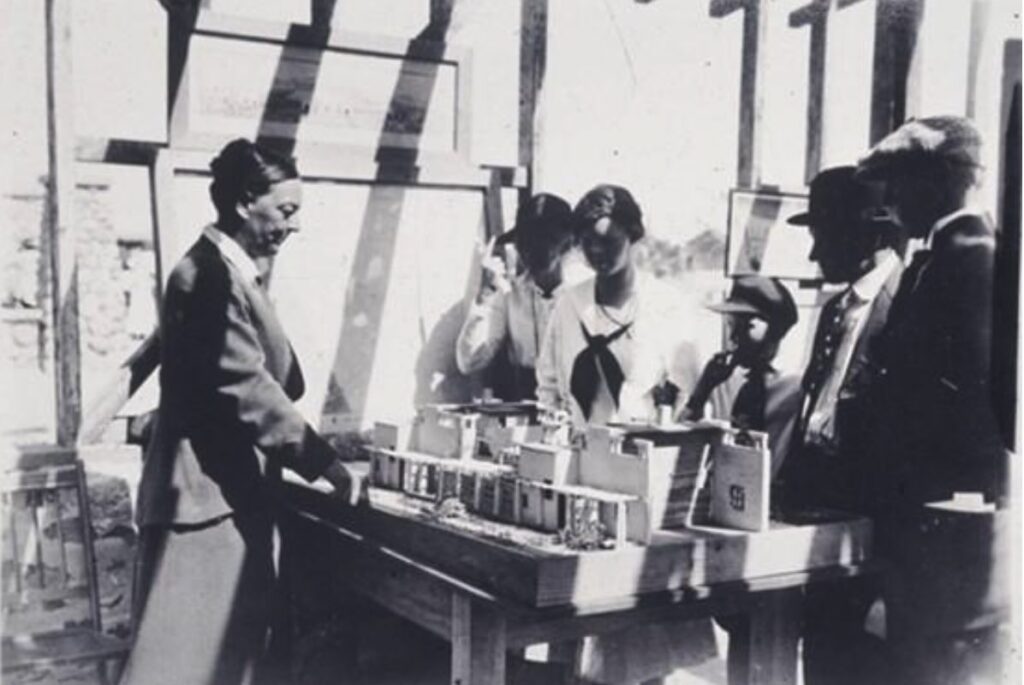
Alice Constance Austin with model of kitchenless house, 1916

Starting from Annie Vrychea’s archive, Professor in the School of Architecture of the National Technical University (NTU) of Athens, who together with other prominent feminist Greek scholars researched the relationship of gender and space, while initiating the relevant module in her department in 1991 after huge efforts. Her archive is now being housed in NTU, where my residency took place, and has been in a cataloguing process for the last couple of years. I more specifically looked into her work on the intermediary/ in-transition spaces that women created in the refugee settlement in Thebes, Greece, to communicate during their everyday lives while performing their unrecognized, invisible domestic work. Annie’s archive was a great inspiration for looking further into domestic design, the isolated household and how this affected women’s lives. Designs from Dolores Hayden’s books could be found in Annie’s archive presenting experimental communities of the late nineteenth and early twentieth century, which provide us a good insight to the benefits and limitations they faced, and that can in turn inform our new projects/experiments. The outcome of the research is an article based on archival and bibliographical research examining the role of architecture in the (in)ability to implement the feminist call of family abolition. Because as Hayden herself says “as contemporary feminist groups begin to investigate housing reform, evaluating the work of earlier activists becomes a political, as well as historical task.

Fani Arampatizou at NTU Athens Read More »

Emer Grant at National Technological University Athens (NTUA)

Research Direction: To explore how spatial practices in art, architecture and design can promote collective models for the development of artist-led institutions. To examine whether these practices can effectively address new cultural economies by engaging diverse publics and facilitating international discursive exchange for sustainability in artistic practices.

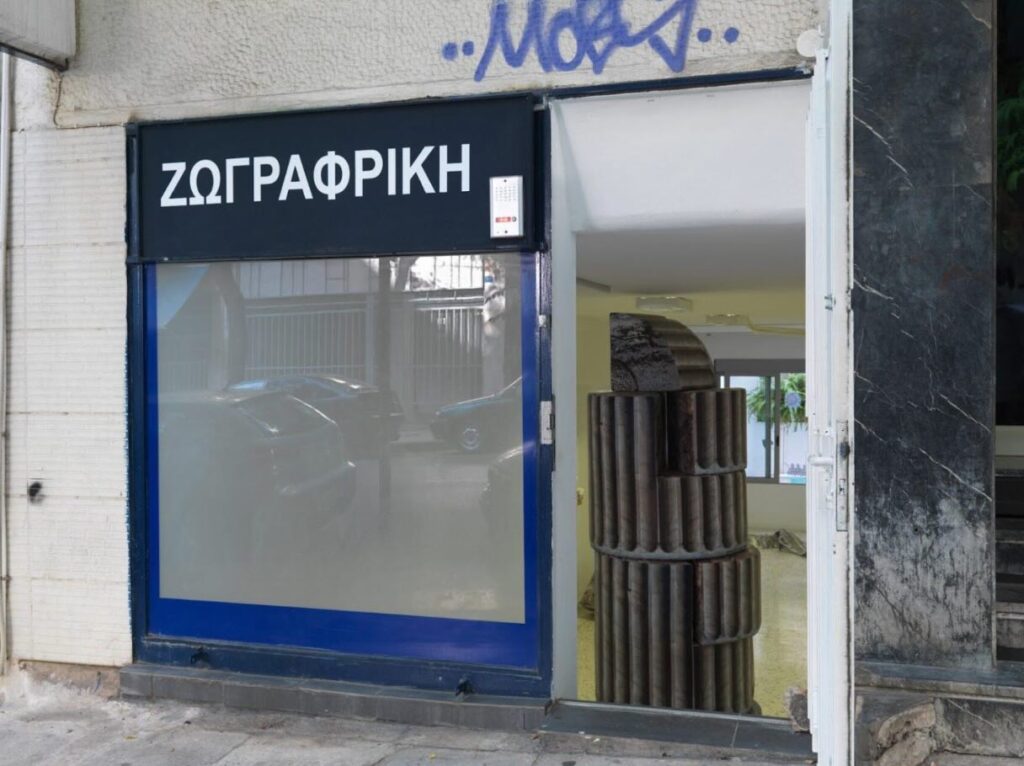
During my previous research secondment in Greece as part of the SpaceX Marie Curie Horizon 2020 program in 2023, I delved into transdisciplinary practices, connecting spatial practices with cultural sociology, cultural policy, and behavioural economics. My engagement with various artist-led organizations in Athens, including Pet Projects, Neo Cosmos, and Deo Projects in Chios, illuminated the potential for developing further exchanges that explore residency practices and their intersection with tourism. This endeavour aligns with my broader research goal of nurturing collective institutions. 

The primary objective of this residency is to explore how spatial practices in art, architecture, and design foster public exchange and promote cohabitation within urban spaces. I aim to examine whether these practices can render new cultural economies by engaging diverse publics and facilitating international discursive exchange within communities.

The research would articulate and produce an evolving practice of collective artist-led institutions as public art. Through site and medium-specific interventions, working with a decentralized, distributed, and democratic network of people and core organisations across public, private, and charitable sectors, the research would unlock a previously untapped resource to develop sustainable artistic practices and policies for reform

Methodology:

My approach involves immersing myself in the vibrant cultural landscape of Athens, and collaborating with local artists, architects, designers, and community members. Through participatory workshops, interviews, and observational studies, I seek insights into the impact of spatial practices on societal dynamics and the potential for fostering inclusive environments.

Outcomes:

Development of programs in Athens addressing inclusive spatial practices, public exchange, and diversity promotion.

Creating an exchange platform between Athens and Northampton, culminating in presentations at both locations.

Integration of research findings and dialogue into the opening program of the new Arts Collective building in Northampton, scheduled for February 2025.

Production of a comprehensive syllabus and toolkit for international collective contemporary artist-led practice as part of a Book to be published by Routledge as part of the H2020 research programme.

As the joint Artistic Director and CEO at NN Contemporary Art, my practice involves reshaping governance structures to drive collaborative strategic directions. My deep involvement in a 4.7 million capital renovation project at NN Contemporary Art over the past three years is crucial. This project transforms NN Contemporary Art into an architectural Arts Collective with expansive studio, gallery, shop, community kitchen, and learning space facilities. The research program aligns with this ongoing project, offering an opportunity to shape the institution’s future direction. NN is not the recipient of capital monies but the end user of the facilities; therefore, testing and developing collective strategies with others is essential. This relies on my participation in various international networks. Engaging with diverse perspectives and collaborating with artists and organizations globally enriches artistic practices and fosters meaningful connections within the artistic community. 

The project looks at new institutional models and focuses on developing programs in dialogue with specific questions around tourism, economies, refugee crisis and gentrification and looking at how the rise in Air b n b economies and the Golden Visa schemes in Athens are causing a threat to the sustainability of artist-led practices and organisations. 

Emer Grant at National Technological University Athens (NTUA) Read More »

Scroll to Top